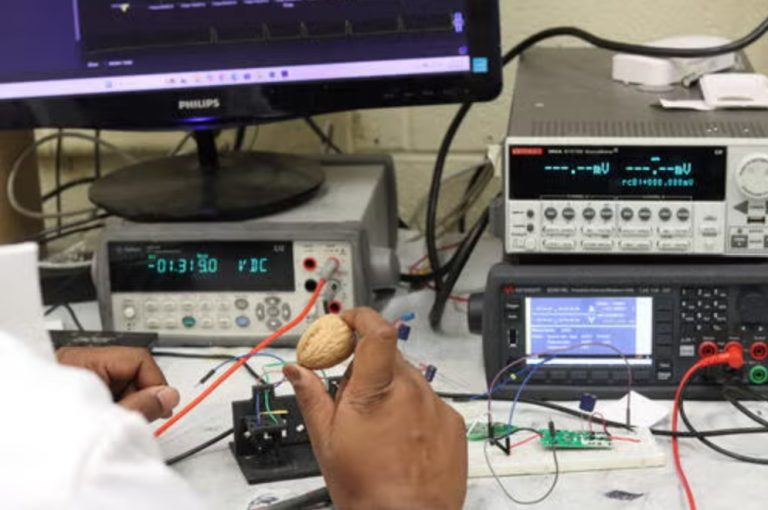


With a goal to transform agricultural waste into clean energy, researchers at the University of Waterloo are developing new ways to generate electricity from natural materials like walnut shells and water – creating sustainable power sources for small electronic devices in remote or off-grid areas.
At the heart of this innovation is a water-induced electric generator – a coin-sized device that generates electricity by harnessing water evaporation through the porous structure of walnut shells. As water travels through the shell, it transports electrically charged ions that interact with the shell’s surface, causing a charge imbalance and producing power. Tests have shown that walnut shells outperform other natural materials, offering a low-cost and renewable energy solution.
By combining nanotechnology and environmental science, this research is helping advance hydrovoltaic energy – a new frontier in clean power generation. The device could one day support environmental monitoring, wearable health devices, and disaster-relief tools, turning everyday waste into practical, sustainable solutions for the future.
For more information, visit the University of Waterloo.