
Ontario Women’s Health Scholars 2025
Ontario Women’s Health Scholars 2025
Transforming the Future of Women’s Health Care Through Research
Whether they’re improving outcomes for women facing depression during and after pregnancy or developing treatment strategies to enhance skeletal muscle health across the lifespan, this year’s recipients of the Ontario Women’s Health Scholars Awards are making life-changing discoveries and advancing the quality of health care for women.
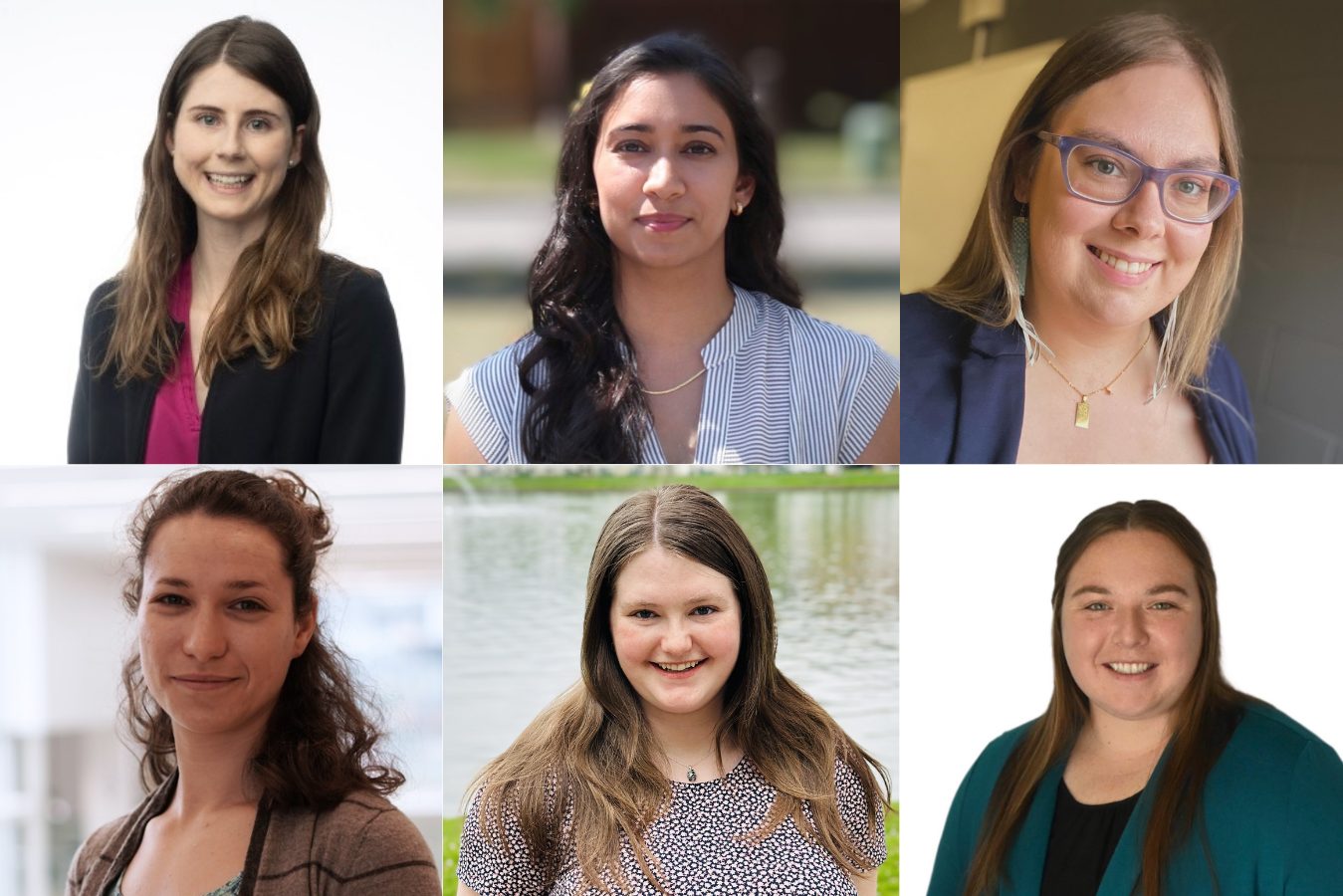
This year, six exceptional Ontario university scholars have been awarded the Women’s Health Scholars Award for their ground-breaking research in women’s health. Each recipient will receive up to $50,000 to further their research aimed at improving the health and well-being of women both in the province and beyond. This awards program recognizes leading university researchers that are dedicated to world-class research excellence. Their work will create new knowledge about women’s health, drive better health services and products for women, and help build a stronger health-care system in Ontario.
Below are this year’s recipients of the Ontario Women’s Health Scholars Awards.

Postdoctoral Award
Zeenat Ladak, University of Toronto


With a focus on improving outcomes for individuals experiencing depression and anxiety during pregnancy or after childbirth, Zeenat Ladak is working on evaluating how virtual health programs can be equitably scaled to better support those facing barriers to care – particularly individuals who are low-income, racialized, or living in rural communities.
Mental health challenges can significantly impact both maternal health and the well-being of children, making accessible support more critical than ever. By using the province-wide trial of Mental health Optimization Virtual Intervention Network (MOVIN), a program supporting pregnant and postpartum individuals through coordinated mental healthcare as a case study, Zeenat is evaluating how it meets the needs of at-risk patient populations and the challenges faced by care providers (care coordinators, psychiatrists, and primary care clinicians), to inform the equitable implementation of digital health programs at a large-scale.
Zeenat is completing her PhD at the University of Toronto’s Applied Psychology and Human Development department. Her doctoral work explored equity in prenatal healthcare using a multi-methods approach, identifying challenges and plausible solutions to improve equitable experiences during pregnancy care. She is also a fellow with the Office of Spread and Scale at Women’s College Hospital Institute for Health System Solutions and Virtual Care.
Jennifer Wilkinson, Queen’s University


To help preserve skeletal muscle mass without adverse side effects, especially in women, Dr. Jennifer Wilkinson is working to build treatment strategies that improve skeletal muscle and metabolic health outcomes for women across their lifespan.
When women are inactive for long periods – such as during casting or bedrest – their muscle mass, strength, and metabolic health can decline quickly. Current drug treatments are costly and often cause side effects, while protein supplements help prevent muscle loss but don’t protect muscle function or metabolism. Dr. Wilkinson’s research is testing whether omega-3 fatty acids can preserve muscle quality in women during these critical periods of immobilization.
Dr. Wilkinson is a Postdoctoral Fellow at Queen’s University in the Nutrition and Metabolism Research and has earned her PhD from the University of Waterloo. Her doctoral research explored sex-related differences in factors that influence insulin sensitivity. She is now utilizing advanced techniques such as stable isotope tracers to create targeted treatment strategies that promote women’s metabolic health throughout their lives.
Doctoral Award
Emily Ferguson, Queen’s University

Emily Ferguson is exploring nutritional strategies to help women maintain skeletal muscle mass and strength following injury and during post-surgical recovery. Her research targets muscle disuse atrophy – when inactivity causes muscle loss. Women may be more susceptible to the negative health effects of muscle-disuse atrophy but nutritional countermeasures to muscle-disuse atrophy in women are currently lacking.
The investigation tests whether combined fish oil and protein supplementation can reduce muscle-disuse atrophy in women undergoing bedrest. Bridging clinical and mechanistic research, Ferguson uses gold-standard techniques such as magnetic resonance imaging, high-resolution respirometry, and stable isotope tracers. Her findings are expected to inform the development of targeted nutritional strategies to prevent muscle loss in women during periods of inactivity.
Emily Ferguson is a doctoral student in the Nutrition and Metabolism Research Group at Queen’s University and has earned her Bachelor of Kinesiology from Wilfrid Laurier University and her Master of Science from Queen’s University. She is also dedicated to knowledge translation and advocacy within her community through free community lectures at local retirement homes on topics such as nutrition and physical activity strategies for healthy aging.
Doctoral Award (Renewal)
Gena Dufour, University of Windsor


Sexual violence disproportionately impacts young women, affecting their access to crucial support systems and Gena Dufour, a PhD candidate in Applied Social Psychology at the University of Windsor, in her continued research is exploring the way victims of gender-based violence interact with larger systems and postsecondary institutions on a day-to-day basis.
In her second year of research, Gena examines how inadequate institutional responses to sexual violence could worsen the harm to survivors. Dufour wants to understand how these institutional dynamics influence survivors’ help-seeking behaviours and recovery processes.
By focusing on university responses to campus sexual assault, Dufour’s dissertation looks into how the fear of institutional betrayal is a barrier to accessing essential campus services. She will be examining this type of fear and its impact on marginalized survivors. By developing a new questionnaire to assess fear of institutional betrayal and comparing it with existing tools, Dufour will be able to provide a reliable measure that captures the unique challenges faced by survivors in educational settings.
Her research examines the link between fear of institutional betrayal and health-related outcomes, such as the willingness of survivors to utilize campus health services. This study sheds light on critical barriers to healthcare accessibility for campus sexual violence survivors and aims to inform policy and practice improvements at universities. Dufour holds an M.Sc. in Applied Forensic Psychology and her research is guided by a commitment to advancing social justice and enhancing institutional support for survivors of gender-based violence in Canadian institutions.
Master’s Award
Alison Randell, Brock University


Hormonal contraceptive (HC) use during adolescence has been linked to an increased risk of negative mood effects and mood disorders, and Alison Randell’s research is exploring whether these risks are even greater with progestin-only contraceptives.
While nearly 400 million people worldwide use HCs, their impact on brain development, especially during adolescence, is not fully understood. Using a rodent model, Randell is examining how exposure to the progestin levonorgestrel during adolescence influences anxiety-like behaviours and whether these changes are linked to differences in receptor protein expression in brain regions involved in anxiety regulation. Her research aims to deepen understanding of how hormonal contraceptives impact the brain and behaviour, with the goal of informing safer prescribing practices and improving health outcomes for users.
Randell graduated with her B.Sc. in Behavioural Neuroscience and is now pursuing her Masters in Psychology at Brock University. Her research combines her passions for both neuroendocrinology and women’s health.
Brynne Yarranton, University of Toronto

With the goal of informing clinical practice on the best way to prepare the uterus for fertility treatments in patients with endometriosis, Brynne Yarranton’s research is identifying approaches that can improve pregnancy and live birth rates while potentially reducing treatment costs and side effects for patients.
Endometriosis is a gynecological condition that carries a higher risk of infertility, and in vitro fertilization (IVF) is often an effective treatment. For frozen embryo transfers, the uterus can be prepared using either ovulation induction (medication-assisted) or a natural cycle (timed to the body’s hormones). While natural cycles have in some cases been linked to higher pregnancy rates and fewer side effects in the general population, their effectiveness in patients with endometriosis remains unclear. Yarranton’s research compares live birth outcomes between natural cycle and ovulation induction methods in patients with endometriosis, with the goal of identifying the most effective and patient-friendly approach to endometrial preparation in this population.
Yarranton is a resident physician in Obstetrics and Gynecology at the University of Ottawa, and she is currently in the process of completing a Master of Science in Health Policy, Management, and Evaluation with a concentration in Clinical Epidemiology at the University of Toronto. She is also a member of the Society of Obstetrics and Gynecology of Canada Resident Leadership Council and the University of Ottawa’s Obstetrics and Gynecology Residency Advocacy Committee.
Additional Resources:
For more information about how the awards are administered, click the link below.